






The eminent physicist Enrico Fermi is said to have made his friends laugh during lunch by suddenly asking, “But where is everybody?” The question seemed to come out of the blue, yet those present understood his point: there are so many planets in the universe that surely some of them must be suitable for life. The probability that we are not alone in the universe appears high. Why, then, is there still no scientific evidence of extraterrestrial intelligence? This is known as the Fermi paradox. Humanity sends probes into space bearing messages in order to make itself discoverable. Numerous antennas listen attentively into the infinite, hoping to detect signals from a distant civilization.
While our imagination is captivated by the search for other forms of intelligence in the depths of the universe, such intelligence has quietly entered our everyday lives. Under the initials AI, the world has come to know artificial intelligence, which for many already sits in their pocket in the form of a mobile phone. Yuval Noah Harari suggests that we should not call it artificial intelligence, because that creates the impression that we control what we have created. He proposes calling it alien intelligence, since it operates differently from the organic mind. There are fields in which it far surpasses human beings and makes independent decisions. Perhaps we are approaching a threshold where human lives will be shaped by decisions whose underlying reasons people themselves are unable to comprehend.
For thousands of years, humanity has highly valued knowledge that comes from accumulated experience, careful observation, learning from mistakes, and gradually integrating complex insights. The path toward such knowledge is slow, inefficient, and difficult to optimize. Today, humanity is witnessing the emergence of a new model of knowledge, one based on instant data processing, algorithms, and continuous optimization. It may be criticized as superficial, yet it cannot easily be dismissed in a world that values quick answers more than profound questions. The more the wise attempt to defend the value of wisdom, the more insignificant they may seem in a world where every second counts and where spending months or even years contemplating a single idea appears not only unnecessary but even morally questionable. It may well be that in the race for optimization something essentially human is being lost. Yet it may also be that this is a development toward a new kind of shared wisdom that will ultimately prove to be a gain. History has shown this before.
Be that as it may, the question arises sharply and urgently in 2026: what truly makes us human? Is it possible to embrace the new without losing what we have had until now? And should we even attempt to do so? Answers to these questions can be found, but they require slow and careful thinking—something for which there is often too little patience today. I wish our conference attentiveness, patience, and depth of thought, so that it may offer insight and courage to those facing the challenges of the future.
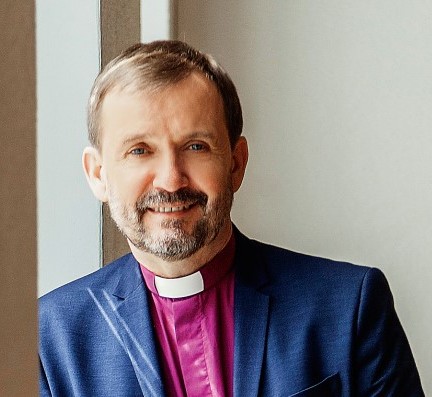
Archbishop Emeritus Jānis Vanags, D.D.
Rector of Luther Academy
 Lutera Akadēmija
 Rīgas Augstākais reliģijas zinātņu institūts